

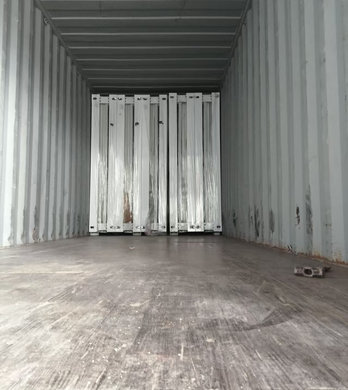
Importing container-based workforce camp units from China comes down to two things: agreeing an Incoterm that fixes who carries freight and risk, and preparing a standard document set so customs can clear the shipment. Most project procurement teams use FOB or CIF, and the papers customs expects are a commercial invoice, packing list, bill of lading, and a certificate of origin. Below is a practical checklist you can hand to your logistics contact before the first container leaves the factory.
Incoterms (International Commercial Terms) are standard rules published by the International Chamber of Commerce that divide cost, risk, and responsibility between seller and buyer during international shipping. For a workforce camp order that may span dozens of flat-pack, folding, or expandable units, the chosen term decides who books the vessel, who pays marine insurance, and the exact point where risk transfers to you. Picking the wrong term is the most common source of budget surprises on camp projects.
The terms you will see most often on camp-unit quotations:
For remote camp projects, FOB and CIF are the most common choices because they keep the supplier responsible through loading or to the destination port, while the buyer handles inland delivery. The exact term on your quotation decides who arranges insurance and where risk transfers, so confirm it before signing.
While exact requirements vary by destination, a complete camp shipment normally travels with:
A reliable supplier issues the commercial invoice, packing list, and bill of lading as standard, and can provide a certificate of origin on request. Ask early which papers are included in the quoted price so there are no surprises at the port.
A camp of 100 beds rarely ships in one box. Group the packing list by unit type (flat-pack, folding, expandable) and by destination zone on site, and keep the model code on every line matching what is on the commercial invoice. Clear packing lists are the single biggest factor in avoiding hold-ups at the port and mis-delivery to the wrong plot on a remote site.
Markets differ, but recognized quality and safety certificates reduce questions at the border. For workforce accommodation, buyers often ask for structural and fire-performance evidence on the sandwich panels, plus the manufacturer's quality-system certificate. Confirm early which marks your destination authority treats as acceptable, because retrofitting certificates after shipment is slow and costly.
Wanbang's production lines are certified to ISO 9001 (quality management), CE (European conformity), and ISO 45001 (occupational health and safety). For destinations outside the EU, confirm whether local fire, electrical, or structural approvals apply, since these vary by market and are best settled at the quotation stage.
In most markets yes – it establishes where the goods were made and may affect the duty rate, especially where a free-trade agreement applies. Ask your broker whether your destination requires the standard form or a preferential version.
That depends on the Incoterm. Under DDP the supplier takes the shipment to your site including duty; under FOB or CIF the buyer manages inland transport from the arrival port. Choose the term that matches your logistics capability.
Raise it before ordering. Some markets require local fire, electrical, or structural approvals that the factory certificate alone does not satisfy. Clarifying this at quotation stage prevents a stuck shipment.
For unit selection by site type, see our guidance on flat-pack vs expandable for site camps and the modular workforce camp buyer's guide.


 IPv6 NETZWERK UNTERSTÜTZT
Hi! Click one of our members below to chat on
 Deutsch
 English
 Français
 Русский
 Italiano
 Español
 Português
 Türk
Türk Ελληνικά
 Indonesia
 عربي
عربي


